When Faith Becomes an Instrument of Power
Iran under the Islamic Republic and Afghanistan under the Taliban are not identical political systems. Their histories, institutions, social structures, and methods of government differ substantially. But those differences should not prevent us from examining an uncomfortable reality: in several fundamental areas, the logic by which these governments exercise power has produced strikingly similar results.
Both have used rigid interpretations of religion and traditional belief to justify political authority, regulate private life, restrict individual freedoms, suppress dissent, and impose state-defined standards of morality.
The issue is not Islam as a religion, nor the personal beliefs of millions of Muslims. The issue begins when a government claims a monopoly over religious truth and then places police, prisons, courts, intelligence services, and coercive laws behind that claim.
At that point, faith is no longer merely faith. It has become an instrument of government.
Women at the Front Line
Nowhere is this more visible than in the treatment of women.
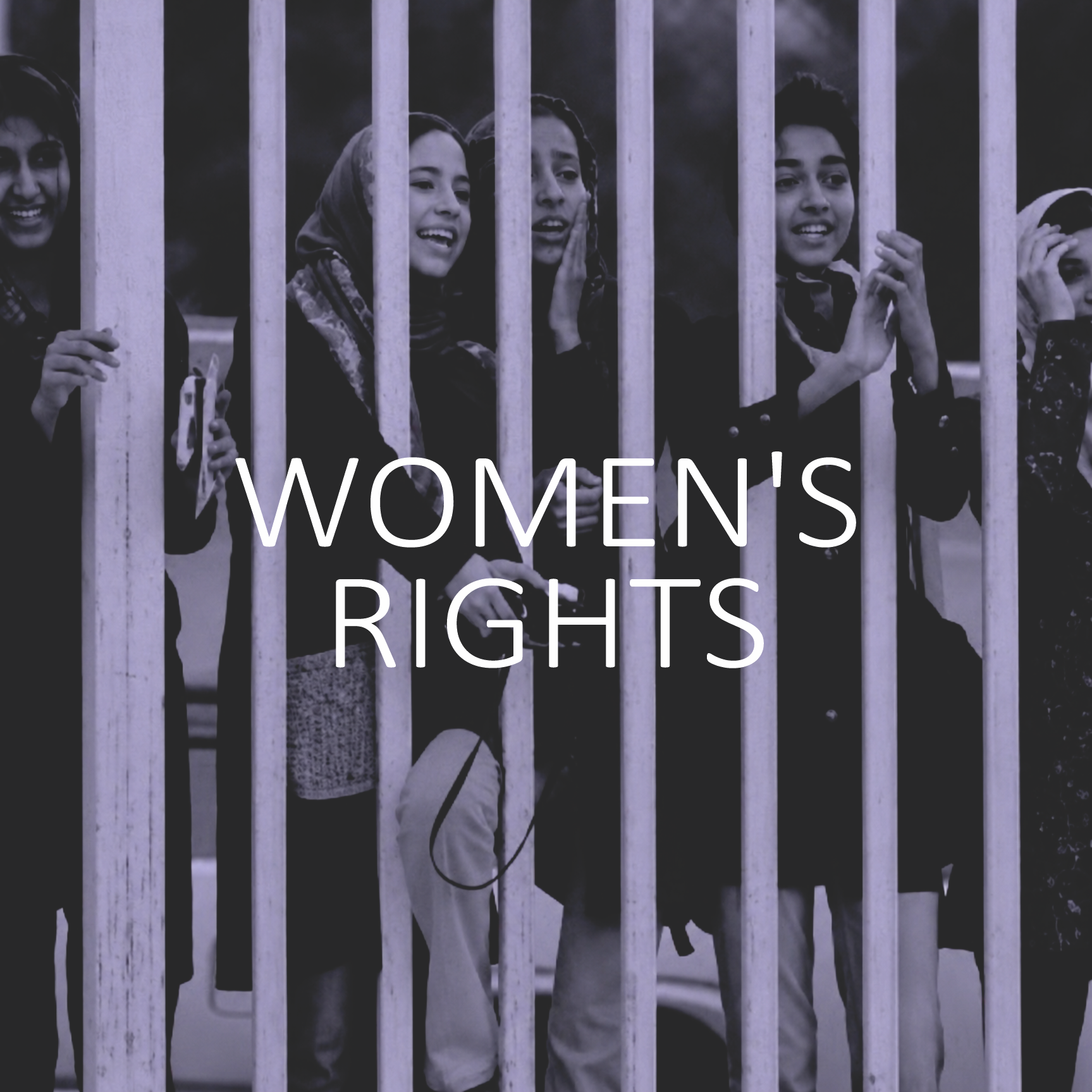
In Afghanistan, the Taliban have progressively pushed women and girls out of large parts of public life since returning to power in August 2021. Girls have been barred from secondary and university education. Women's employment has been severely restricted. Their freedom of movement and access to public spaces have been curtailed, and an expanding body of rules has attempted to regulate even the most ordinary aspects of their existence.
The severity and institutional character of these restrictions have led UN experts and human-rights advocates to increasingly describe the situation through the concept of gender apartheid.
Iran presents a different picture. Iranian women remain deeply present in universities, professions, culture, business, and public life. It would therefore be inaccurate to claim that their situation is identical to that of Afghan women.
But the underlying question of state control remains.
After successive waves of protest, particularly the Woman, Life, Freedom uprising, compulsory hijab enforcement increasingly became associated with surveillance, policing, prosecution, fines, vehicle seizures, arrests, and other forms of state pressure. Measures such as Plan Noor demonstrated how far the government was prepared to mobilize its institutions to enforce an ideological definition of acceptable female appearance.
That raises a question that should make any government uncomfortable:
When police officers, courts, surveillance cameras, security institutions, financial penalties, and imprisonment are required to determine how a woman dresses, are we still discussing religion, or are we discussing political control?
Two Systems, Different Methods, Familiar Logic
The Taliban often exercise ideological authority openly and directly.
Iran's Islamic Republic operates through a far more developed institutional apparatus: legislation, courts, police, intelligence agencies, religious institutions, administrative regulations, and controlled political structures.
The mechanisms are different.
The underlying problem is disturbingly familiar.
When individual liberty collides with the official religious ideology of the state, the citizen is expected to retreat.
Religion, which should belong to the conscience of the individual, becomes entangled with the machinery of government. The state defines the acceptable interpretation, converts it into law, and then gives coercive institutions responsibility for enforcing it.
Each government has, in its own way, used religion and traditional belief to preserve authority, impose conformity, and suppress challenges to the political order.
At times the resemblance is so pronounced that the two systems appear, despite their considerable differences, to have emerged from the same authoritarian family.
Protest: When the Citizen Becomes a Security Threat
A second point of comparison is the treatment of dissent.
In a functioning democracy, peaceful protest is not an attack on the state. It is part of political life.
Authoritarian governments frequently reverse that principle. Instead of asking why people are protesting, they ask how the protest can be stopped.
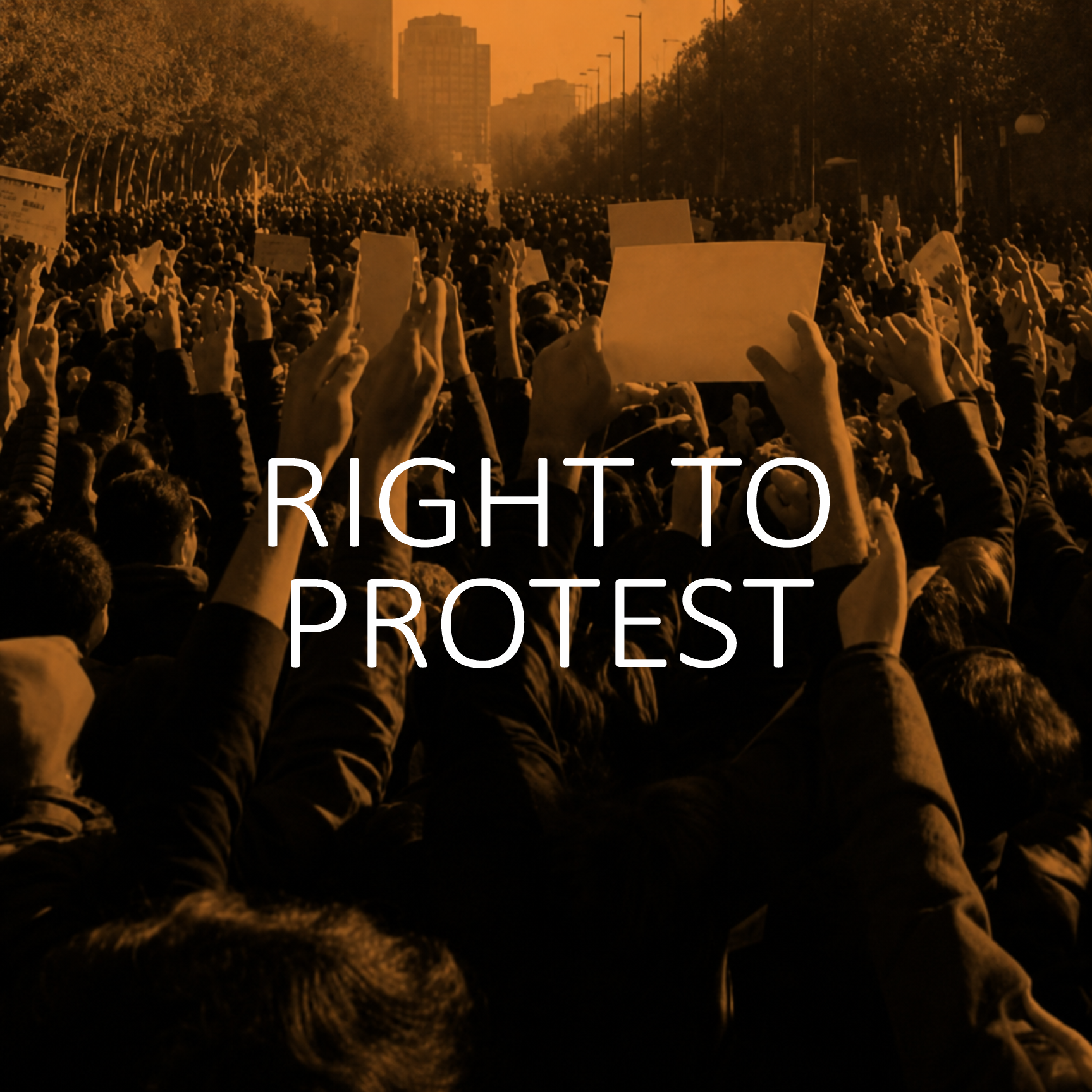
Iran has repeatedly witnessed violent crackdowns during periods of nationwide unrest. Protesters have been killed, thousands arrested, families placed under pressure, and allegations of torture and serious mistreatment in detention have been extensively documented by international human-rights mechanisms.
The authorities have also repeatedly restricted internet access during periods of unrest.
That matters enormously.
An internet shutdown does more than prevent someone from posting a video. It can prevent journalists from documenting events, families from locating detained relatives, witnesses from transmitting evidence, and the outside world from seeing what is happening.
Turning off the internet can become the digital equivalent of closing the doors before repression begins.
Taliban authorities have likewise severely restricted peaceful dissent, particularly demonstrations led by women. Journalists, activists, and critics have faced intimidation, detention, and pressure.
In both environments, the message extends far beyond the individual who is arrested:
Remain silent, because resistance may carry a devastating price.
Prison: Where Power Operates Beyond Public View
Repressive governments enjoy their greatest freedom where cameras cannot easily reach.
That place is often the prison.
Reports concerning Iran have documented torture, ill-treatment, arbitrary detention, coerced confessions, denial of due process, and pressure on political detainees and protesters.
Reports from Afghanistan have similarly raised serious concerns regarding arbitrary detention, torture and mistreatment of critics, former officials, journalists, activists, and others considered troublesome by Taliban authorities.
A prison under such circumstances is no longer simply a place where judicial sentences are carried out.
It becomes part of the political architecture of fear.
The objective is not necessarily limited to punishing one prisoner. Breaking one dissident can send a warning to thousands of people outside the prison walls.
Execution and Public Punishment: Fear as Political Theatre
Iran remains one of the world's most prolific users of capital punishment. The extraordinary scale of executions, together with concerns surrounding due process and politically sensitive prosecutions, has repeatedly drawn international condemnation.
Afghanistan under the Taliban has restored public executions and corporal punishments, including public flogging.
There is another dimension to such punishment that deserves attention.
When a person is flogged before a crowd or publicly executed, punishment becomes more than a judicial act.
It becomes political theatre.
The state demonstrates what it can do to the human body, while everyone watching understands the message.
Fear itself becomes an instrument of governance.
Is Taliban Rule a Copy of the Islamic Republic?
It would be journalistically irresponsible to claim, without evidence, that the Taliban simply copied its system of repression directly from Iran.
But the comparison raises a more important question.
Why do two governments with different histories and institutions repeatedly arrive at comparable methods of social control?
Compulsory religious rules | Control over women's bodies | Suppression of peaceful protest. | Pressure on journalists.
Punishment of dissent | Restrictions on information | Political use of imprisonment |
And the treatment of ideological disagreement as a security problem | The explanation may not require a hidden partnership or common command center.
The similarity may arise from something more fundamental: ideological government itself.
Once rulers believe that they possess not merely political authority but also the right to determine how citizens should dress, think, believe, speak, associate, and live, the distance between government and authoritarian guardianship becomes dangerously small.
The Problem Does Not End at the Borders of Iran and Afghanistan
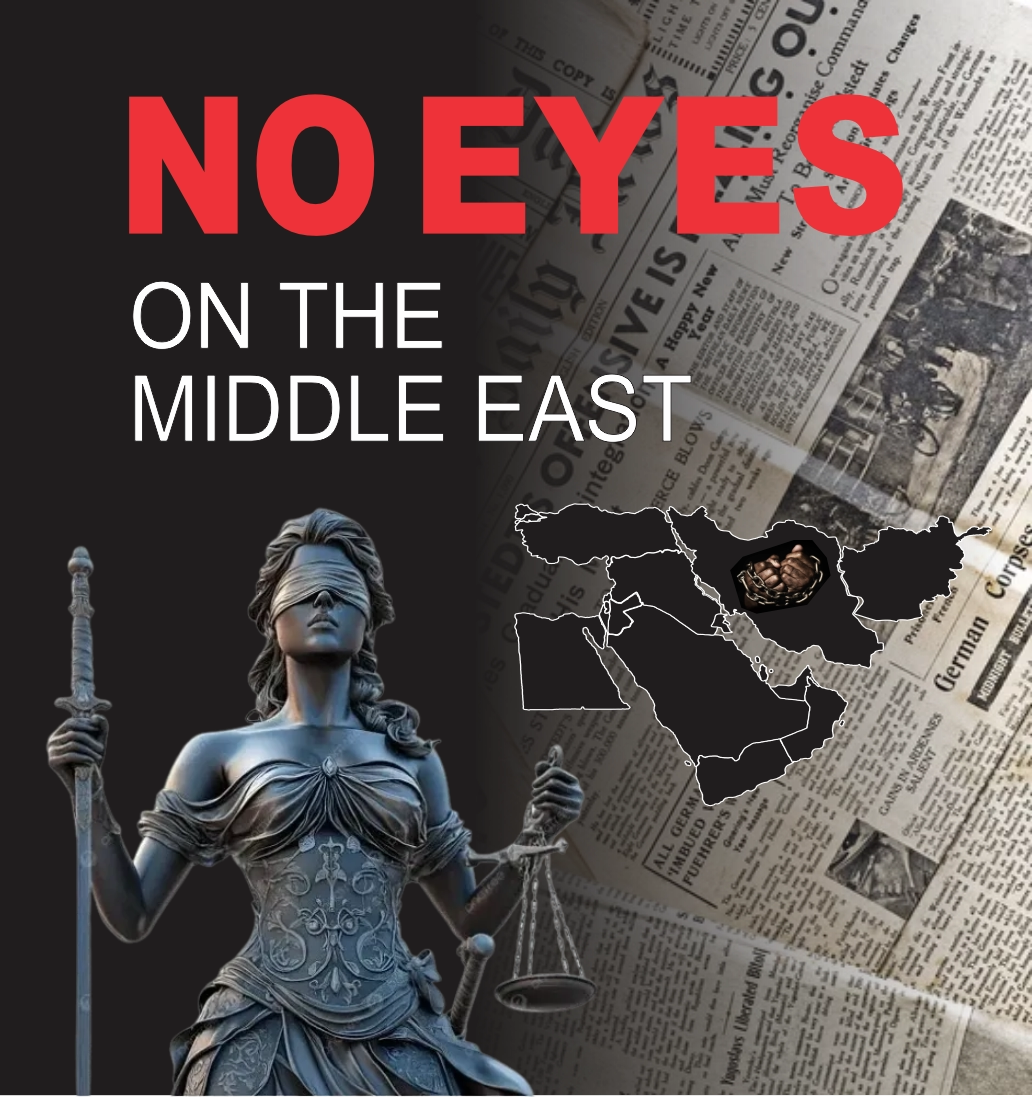
Iran and Afghanistan represent particularly serious cases, but they are not the only countries in the region where power and fundamental freedoms collide.
Turkey remains fundamentally different from both regimes and retains competitive political institutions. Nevertheless, pressure on journalists and media organizations, prosecutions of critics, restrictions on demonstrations, and concerns regarding institutional independence have generated sustained criticism. Turkey demonstrates an important lesson: democratic freedoms do not always disappear overnight. They can also be weakened incrementally.
Saudi Arabia has undergone significant social transformation, including important changes affecting women's participation in society. Those developments should be acknowledged. But modernization does not erase continuing concerns over freedom of expression, treatment of dissidents, political imprisonment, and extensive use of capital punishment. Skyscrapers, investment, and economic modernization cannot substitute for the citizen's right to question power.
Iraq has elections and a pluralistic political system, but elections alone do not guarantee democratic government. Corruption, armed groups operating outside effective state control, weaknesses in the rule of law, and violence against protesters and activists have repeatedly exposed the fragility of civil liberties.
Syria has endured one of the most devastating human-rights catastrophes of the modern Middle East. Years of war, torture, disappearance, displacement, imprisonment, and destruction cannot simply be buried beneath changing political circumstances. Any legitimate future requires truth about the disappeared, accountability for grave abuses, justice for victims, and institutions capable of preventing another authoritarian order from replacing the previous one.
These countries should not be placed indiscriminately in the same political category.
But the same question should be asked everywhere:
How much power does the state possess over the citizen, and what happens when the citizen says no?
Journalists: The Witnesses Governments Would Rather Not Have
This is precisely why independent journalism matters.
Authoritarian power does not merely seek control over streets and institutions. It seeks control over the narrative.
A dead protester can become a statistic.
A tortured prisoner can disappear behind a prison wall.
An arrested woman can become an anonymous case number.
But a journalist can give that person a name, reconstruct what happened, identify those responsible, preserve evidence, and place a government's official version of events under scrutiny.
This explains why censorship, intimidation of journalists, internet shutdowns, restrictions on foreign correspondents, and pressure on independent media so often accompany political repression.
The struggle is not merely over information.
It is over who has the authority to define reality.
And Where Are the Human-Rights Organizations?
This brings us to an uncomfortable question that the international human-rights establishment itself should be willing to confront.
For decades, reports have been published.
Executions have been condemned.
Torture has been documented.
Journalists have been imprisoned and their cases reported.
Women have been beaten, arrested, restricted, or excluded from public life.
Resolutions have been adopted.
Special rapporteurs have been appointed.
Fact-finding missions have been established.
And yet, in many places, the machinery of repression continues.
It would be inaccurate to claim that organizations such as the United Nations human-rights mechanisms, Amnesty International, Human Rights Watch, or other monitoring bodies have literally remained silent. They have produced substantial documentation, often under extremely difficult conditions.
But acknowledging their work does not eliminate the harder question:
What happens when the world documents repression repeatedly but cannot stop the next victim from being created?
For victims, there is an enormous difference between documenting yesterday's crime and preventing tomorrow's.
At times, international reactions appear painfully slow, excessively cautious, politically selective, or disconnected from the urgency experienced by those living under repression.
And that creates another legitimate question:
Is human rights truly treated as a universal principle, or does the intensity of international outrage sometimes depend on strategic alliances, economic interests, energy, security, and geopolitics?
If human rights are universal, their application cannot depend upon the passport of the victim or the political importance of the government responsible.
A prisoner in Tehran, a woman in Kabul, a journalist in Istanbul, a dissident in Riyadh, an activist in Baghdad, and a torture victim in Damascus possess the same human dignity.
There should not be valuable victims and inconvenient victims.
When the World Sees but Does Not Act
Perhaps the deepest failure is therefore not blindness.
The world often does see.
It sees through satellite images, leaked videos, eyewitness testimony, journalists, refugees, human-rights investigators, court documents, and the voices of survivors.
The problem begins when seeing becomes a substitute for acting.
A human-rights institution without enforcement authority can investigate and preserve evidence. A journalist can expose wrongdoing. A UN body can condemn abuses. International courts may eventually establish responsibility.
All of this matters.
But none of it should become an excuse for accepting permanent helplessness.
When atrocities are documented year after year while the perpetrators conclude that the political cost remains manageable, condemnation risks becoming part of the routine surrounding repression rather than an effective challenge to it.
That is the criticism international institutions must answer.
Not simply: Did you speak?
But: Did speaking change anything?
Conclusion: The Real Question Is Power
The central issue in Iran and Afghanistan is not religion itself.
Millions of Muslims practice their faith without demanding control over another person's clothing, education, political opinions, or private life.
The danger begins when rulers transform one interpretation of religion into compulsory state ideology and place the coercive power of government behind it.
Iran and Afghanistan are different countries governed through different political structures. Turkey, Saudi Arabia, Iraq, and Syria present still different political realities.
They should not be artificially treated as identical.
Yet across these societies, one principle remains non-negotiable:
No government should possess unlimited authority over the human being.
A government that fears a woman's choice, a student's question, a journalist's investigation, an opposition voice, or a peaceful crowd in the street should not automatically be allowed to redefine those citizens as enemies.
And the international community cannot indefinitely congratulate itself for documenting abuses while victims continue asking why documentation so rarely becomes protection.
The final question therefore belongs not only to Tehran or Kabul, but also to the institutions that claim to defend universal human rights:
When governments use ideology, law, prisons, censorship, violence, and fear to silence their people, will the world merely record what happened, or will human rights finally acquire consequences strong enough to protect the human beings in whose name they were created?
Prepared by the Global Human Rights Network Editorial Team