Inflation
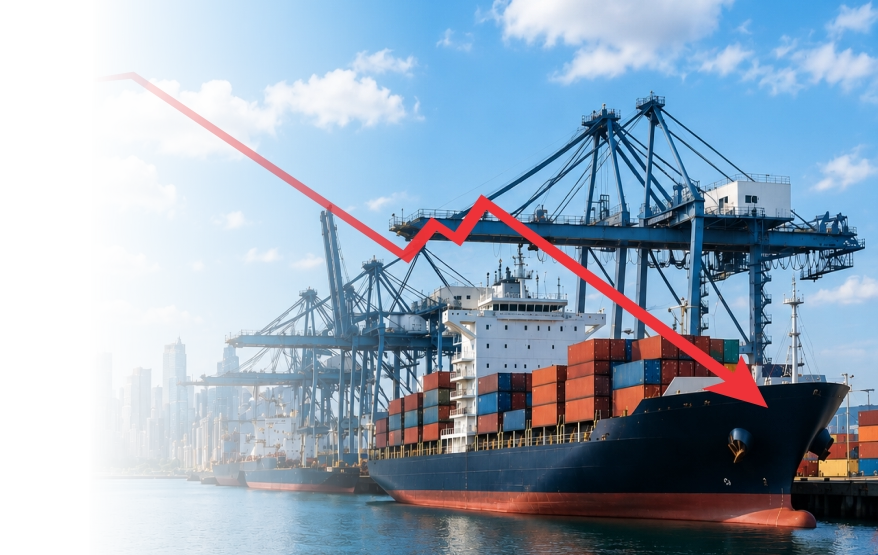
Inflation can turn basic necessities into unaffordable expenses, forcing families to choose between food, healthcare, housing, and education. In areas affected by terrorism, attacks on transportation routes, extortion, and disrupted commerce can further raise consumer prices. When governments fail to protect vulnerable populations or respond to economic grievances, the consequences can extend beyond financial hardship, threatening human dignity, social stability, and fundamental economic and social rights.
How Economic Decisions, Terrorism, and Political Repression Shape Household Survival in the Middle East
GHRNetwork | Economic & Human Rights Analysis | October 12, 2026
Prepared and Written by Akbar Amirzadeh Irani
Human rights advocate, journalist, political activist and analyst.
The economic consequences of war, terrorism, and political decisions are not measured only in stock markets, national budgets, or international trade figures. They are measured in the meals families can afford, the medicines patients can obtain, the rent workers struggle to pay, and the educational opportunities children lose when household income collapses.
Across the Middle East, inflation, interest rates, energy prices, housing shortages, and currency instability are becoming increasingly interconnected with regional security and human rights. A disruption in petroleum exports can influence electricity prices thousands of miles away. A weakened national currency can turn imported medicine into a luxury. An increase in borrowing costs can prevent a small business from reopening after an armed attack.
The consequences become particularly severe where political repression, corruption, institutional weakness, and armed organizations obstruct economic recovery.
According to the World Bank's October 2026 regional economic update, economic output across the Middle East, North Africa, Afghanistan, and Pakistan is projected to contract by 2.1% in 2026, following 3.3% growth in 2025. Gulf Cooperation Council economies are projected to contract by an average of 4.3%, reflecting the extraordinary consequences of disruptions to energy production and exports.
These regional figures reveal the scale of the shock, but they cannot fully describe its unequal distribution. A wealthy household may reduce discretionary spending when prices increase. A low-income family may have to sacrifice nutrition, medical treatment, heating, or safe housing.
Inflation is particularly damaging when essential expenses rise faster than wages. Unlike purchases that can be postponed, food, transportation, rent, and electricity are recurring necessities. Families cannot indefinitely reduce their consumption of these services without suffering consequences for their health, employment, or living conditions.
The global movement of commodities has made these pressures more difficult to contain. In May 2026, the World Bank reported that global food prices had increased by approximately 5% over the two months following the outbreak of the Middle East conflict in late February. Higher petroleum costs, fertilizer expenses, and transportation disruptions contributed to the increase.
For agricultural producers, expensive fertilizers and fuel raise operating costs before crops even reach consumers. For food-importing countries, the consequences are amplified by international shipping charges and currency movements. The burden eventually reaches local wholesalers, retailers, and households.
Interest Rates
Interest rate fluctuations influence the availability of financing for businesses, homeowners, and essential public services. In conflict-affected economies, elevated lending risks and weak financial oversight can push banks to withdraw from vulnerable communities, leaving small businesses and low-income families dependent on costly informal lenders. Armed groups and criminal organizations may exploit these financial gaps through extortion, predatory lending, and control over local commerce. Restricted access to legitimate financing can threaten economic independence, employment opportunities, and the right to an adequate standard of living.
Interest-rate decisions introduce another layer of financial pressure. Central banks may raise borrowing costs to contain persistent inflation, but monetary tightening also influences business loans, consumer credit, and housing finance. Small enterprises operating on narrow margins can find it difficult to replace equipment, maintain inventories, or continue employing workers.
This creates a serious policy dilemma in fragile economies: measures intended to restore price stability can also restrict the financing needed to preserve employment and rebuild damaged communities.
The International Monetary Fund's July 2026 World Economic Outlook update emphasized the difficult balance between controlling inflation, supporting economic activity, and protecting vulnerable households.
The effectiveness of these decisions depends heavily on government institutions. Financial policy becomes less credible when public spending lacks transparency, banking systems are poorly supervised, or politically connected enterprises receive preferential treatment while independent businesses are excluded.
Energy represents an especially powerful connection between national economic policy and everyday human rights.
Electricity is necessary for hospitals, water-treatment facilities, refrigeration, communications, factories, and schools. Diesel supports commercial transportation, agricultural equipment, and emergency generators. Natural gas influences industrial production and power generation.
When energy infrastructure is damaged or supplies are interrupted, the damage can spread far beyond electricity bills.
The International Energy Agency's 2026 Gas Market Report identified major disruptions to international natural gas supplies following the Middle East conflict, including the loss of almost 20% of global liquefied natural gas supply during the initial disruption.
The resulting strain on energy markets affected consumers and industries beyond the countries directly involved in hostilities.
Energy
Oil, gas, and electricity prices directly affect transportation, production costs, government finances, household livelihoods, brain drain, capital flight, and asylum-seeking across the region. Economic instability can accelerate lawlessness, weaken respect for the rule of law, undermine political authority, and erode public confidence in government institutions. Combined with human rights violations and political repression, these conditions can fuel organized crime, violence, and terrorism across the region and worldwide. As state authority weakens, power may increasingly shift into the hands of criminal networks and terrorist organizations, enabling them to expand their influence and gain control over vulnerable communities, economic resources, and political institutions.
Housing is another increasingly important dimension of economic insecurity. Armed violence can destroy residential buildings, force families into temporary accommodation, and increase demand for rental properties in comparatively safer cities.
Displacement creates competition for limited housing without necessarily increasing the number of available homes. Families that have already lost their possessions may face advance rental payments, expensive transportation, and unfamiliar legal requirements.
For refugees and displaced communities, the absence of secure housing can make employment, education, and access to healthcare substantially more difficult. Women, children, older people, and individuals with disabilities may face additional barriers to obtaining suitable accommodation.
These pressures reveal why housing cannot be assessed solely through property prices or construction statistics. Housing security is also a measure of social protection and human dignity.
Currency depreciation can make the situation worse by raising the domestic price of imported necessities. Economies dependent on foreign food, pharmaceuticals, machinery, or fuel are particularly exposed. When foreign-exchange reserves decline or access to international payment systems becomes restricted, importers may face difficulties obtaining essential supplies even when those goods remain available internationally.
Yemen provides a documented example. In its November 2025 economic assessment, the World Bank reported that the price of a basic food basket in areas controlled by the internationally recognized government was 26% higher in June 2025 than a year earlier. Currency depreciation and economic fragmentation contributed to the deterioration in household purchasing power.
For workers paid in local currency, even regular wages may become insufficient when imported goods are priced against stronger foreign currencies.
The effects extend into employment and professional migration. Doctors, engineers, teachers, technicians, and entrepreneurs may reconsider remaining in countries where wages lose value, public services deteriorate, and personal security becomes uncertain.
The departure of skilled workers can then weaken hospitals, utilities, schools, and private enterprises, reducing the capacity of those economies to recover.
The International Labour Organization documented the severity of employment disruption in Lebanon in July 2026. Its survey of 2,485 previously employed private-sector workers found that 33% were no longer working at the time of the May survey. Average labor income was estimated to have declined by 40.4% when job losses and lower earnings were considered together.
These figures show that economic damage cannot be evaluated through inflation or GDP alone. The loss of employment, accumulated savings, and professional capacity can leave lasting consequences for entire communities.
Currency
Currency depreciation can increase the domestic cost of imported food, medicine, equipment, and essential consumer goods, reducing purchasing power and threatening access to basic necessities. Rising costs can deepen poverty, economic inequality, and human rights violations, particularly in regions affected by political repression, corruption, and terrorism. Prolonged economic instability can also accelerate capital flight, forced migration, and public distrust in government institutions, creating conditions that criminal networks and terrorist organizations may exploit to expand their influence, recruit vulnerable individuals, and undermine national and regional security.
The relationship between terrorism and household economics introduces a further danger. Organizations exercising coercive territorial control can extract money from commercial activity through extortion, unauthorized taxation, and other forms of economic exploitation.
The Financial Action Task Force has documented the historical use of extortion, illicit taxation, and commodity-related activity by ISIS as sources of organizational financing.
Such practices can impose costs that do not appear in official tax records. A trader compelled to surrender part of a shipment's value, a transporter forced to pay an armed checkpoint, or a business owner threatened by a militant organization may incorporate those losses into prices, reduce operations, or abandon the market altogether.
Communities then experience a double economic burden: legitimate taxes and market expenses imposed by the formal economy, combined with coercive payments demanded outside the law.
Counterterrorism policies also require careful implementation. Financial restrictions are essential tools for disrupting illicit financing, but excessive banking restrictions can unintentionally obstruct lawful remittances, humanitarian transfers, and legitimate small businesses.
The FATF's guidance on nonprofit organizations emphasizes that counterterrorist-financing safeguards should be risk-based and should not unnecessarily disrupt lawful humanitarian activity.
Economic security and counterterrorism enforcement must therefore be treated as complementary responsibilities, not competing objectives.
Governments face another consequential decision when energy and food prices rise: whether to subsidize products broadly or direct financial assistance toward households most in need.
According to the IMF's June 2026 assessment of energy-related fiscal policies, nearly 900 policy measures had been introduced across approximately 170 countries in response to the energy crisis.
Broad subsidies can reduce immediate consumer prices, but they may also impose substantial fiscal costs and direct public resources toward higher-income consumers who purchase greater quantities of subsidized products. Well-designed, targeted assistance can provide more direct support to vulnerable households while preserving government resources for essential public services.
The human rights implications are fundamental.
Article 11 of the International Covenant on Economic, Social and Cultural Rights recognizes the right to an adequate standard of living, including adequate food, clothing, and housing. Article 12 recognizes the right to the highest attainable standard of physical and mental health.
These obligations require governments to examine economic decisions not merely through fiscal balances or investor confidence but also through their consequences for people's access to essential needs.
Inflation alone is not necessarily a human rights violation, nor does economic hardship automatically lead to terrorism. The responsibility of public institutions, however, becomes especially important when discriminatory policies, corruption, arbitrary restrictions, or failures to protect civilians unnecessarily deepen deprivation.
The economic future of the Middle East will depend partly on how governments respond to these combined pressures. Reliable public services, accountable financial management, protection of civilian infrastructure, fair access to markets, and effective safeguards against terrorist financing are essential to restoring economic confidence.
The most meaningful test of economic policy is not whether a government can temporarily defend a currency, increase interest rates, or report stronger financial indicators.
It is whether ordinary people can work, maintain secure homes, obtain medical treatment, support their families, and exercise their fundamental rights without being subjected to violence, exploitation, or political coercion.
An economy cannot be considered genuinely secure when its financial institutions survive but its people lose the means to live with dignity.