TURKEY’S POLITICAL SYSTEM AND REGIONAL ROLE
Domestic Repression, Cross-Border Military Reach, Digital Control, Sanctions-Evasion Exposure and Turkey’s Strategic Game Between NATO, Russia, Iran and the Middle East
An Investigative Open-Source Intelligence, Human-Rights and Political Report
Reporting Period: January 2025 to September 29, 2026
Analytical scope: This report concerns Turkey only. It examines Turkey’s domestic political repression, digital-control infrastructure, military reach in Syria and Iraq, relations with Iran and Russia, sanctions-sensitive trade and procurement networks, and the consequences for Europe and the United States. Iron Triangle note: In this analytical framework, the Iron Triangle remains China, Russia and Iran. Turkey is not part of that triangle. Turkey is instead treated as a separate regional power that intersects with all three states through trade, diplomacy, security, energy and regional competition.
PART I: Judicial Power, Opposition Repression, Protest Policing, Women, Kurdish Politics and the Domestic Control System
A Political System in Which Courts Have Become Central to Political Conflict
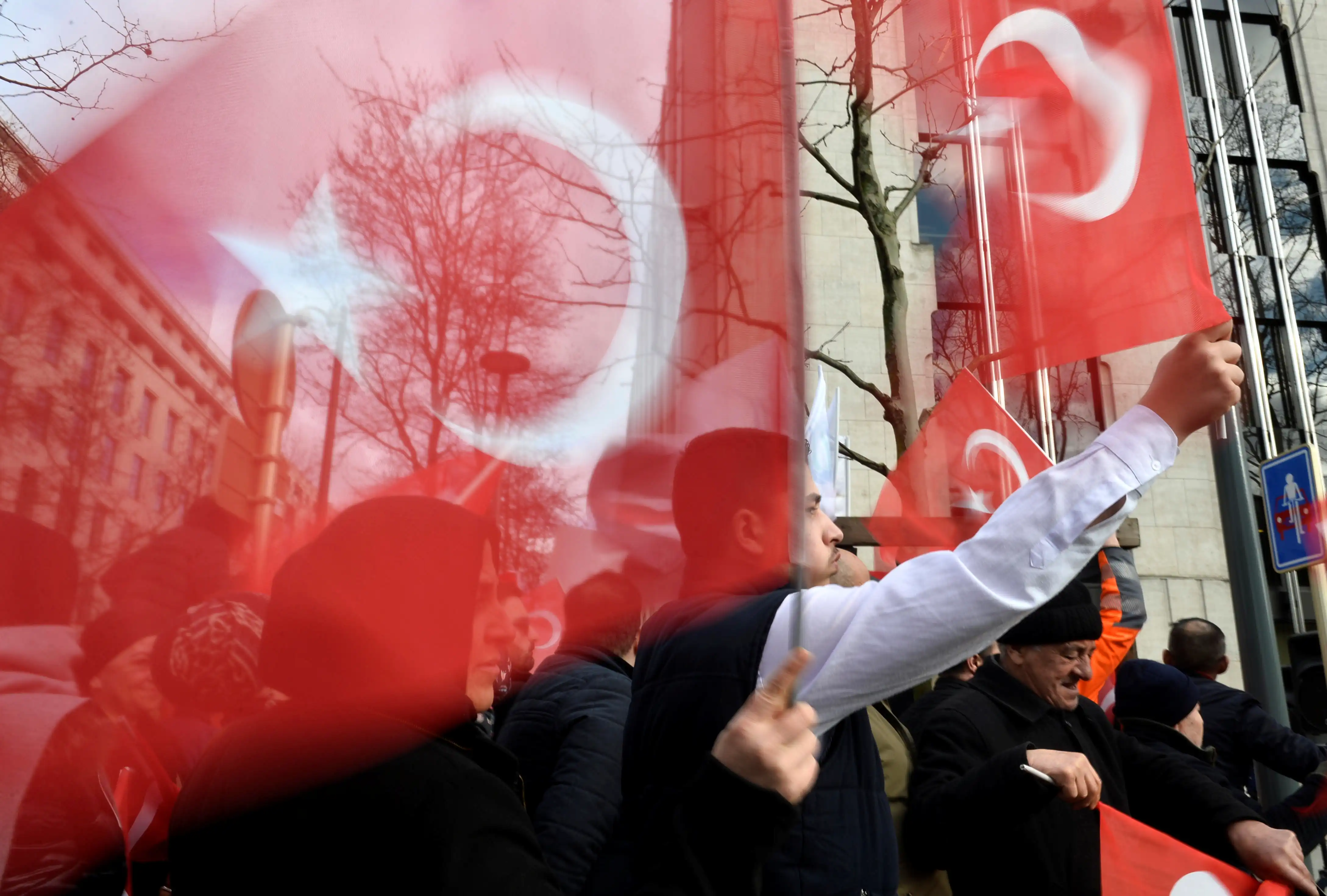
Turkey remained a multiparty NATO state in 2025 and 2026, but political confrontation increasingly moved through prosecutors, courts, administrative trustees, media regulation and criminal proceedings. Human Rights Watch reported that the government intensified pressure on the main opposition Republican People’s Party, the CHP, during 2025 after the party’s strong local-election performance in 2024. HRW said the pattern raised serious concerns for political association and electoral competition. Turkish authorities, by contrast, have maintained that prosecutors and judges are acting on criminal allegations rather than political instruction. Human Rights Watch The distinction matters because many of the most important cases remain active judicial proceedings.
The central question is therefore not whether every charge is fabricated, but whether the cumulative structure of prosecutions, detentions, party litigation and administrative intervention is altering the competitive political environment.
March 19, 2025: The İmamoğlu Arrest and Nationwide Protest Wave
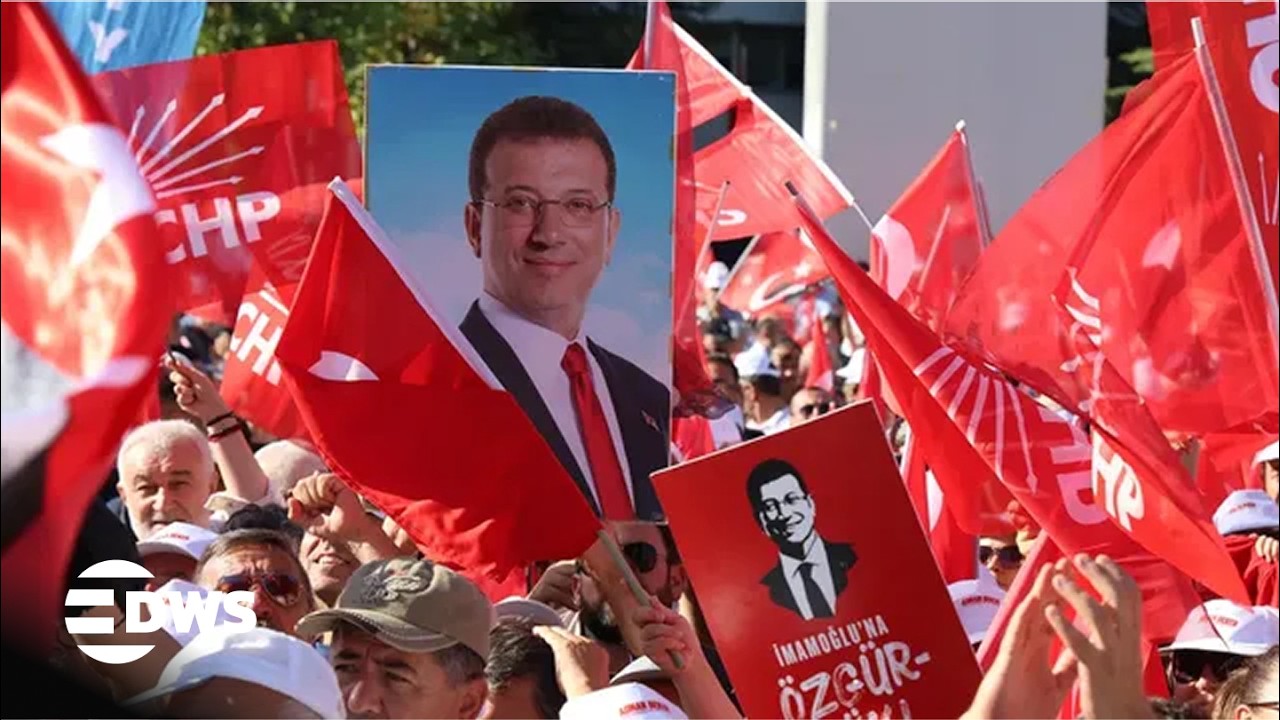
On March 19, 2025, Turkish authorities detained Istanbul mayor Ekrem İmamoğlu and scores of other people associated with Istanbul municipal structures. The arrest triggered the largest national protest wave Turkey had seen in years. Amnesty International reported that by March 24 the authorities themselves had acknowledged 1,133 protest-related detentions, while later official figures cited by Amnesty put total detentions between March 19 and March 26 at 1,879 people. Amnesty International
Amnesty described the demonstrations as overwhelmingly peaceful and documented use of tear gas, water cannon, pepper spray and kinetic-impact projectiles. Its later investigation concluded that some incidents of police force may have amounted to torture or other ill-treatment. Amnesty International That wording should be preserved precisely. The evidence supports serious allegations of unlawful force and possible torture in particular incidents. It does not mean every police action during the demonstrations constituted torture.
Protest Bans as a Political-Control Tool
Turkey’s response did not depend only on physical crowd control. Administrative authorities imposed broad protest restrictions in major cities. Amnesty criticized those blanket prohibitions as disproportionate restrictions on peaceful assembly. Similar restrictions resurfaced in September 2025 when police and opposition supporters again clashed around CHP-related political disputes. Amnesty International
The effective enforcement model therefore had several layers:
Administrative bans, police dispersal, mass detention, prosecution, internet throttling and account blocking.
This combination can significantly constrain mobilization even without a formal nationwide emergency.
2026: Opposition Pressure Continued

The confrontation with the CHP did not end after the March 2025 protest cycle. Human Rights Watch reported in February 2026 that the government had spent the previous year targeting the main opposition while simultaneously pursuing negotiations aimed at ending the PKK conflict. Human Rights Watch Ahead of the July 2026 NATO summit in Ankara, HRW reported another major wave of arrests. On June 23, at least 209 people were detained; prosecutors later said 225 had been arrested, with 178 remanded to pretrial detention and 34 placed under house arrest. Those detained included a journalist, lawyers, an academic, environmental activists and an LGBT activist. Human Rights Watch
This was not simply a continuation of one municipal-corruption case. It demonstrated that politically sensitive policing and national-security prosecutions had widened into multiple sectors of civil society.
Osman Kavala and Turkey’s European Legal Obligations
The Osman Kavala case remains one of the clearest rule-of-law tests because it involves binding European Court of Human Rights judgments. The significance of such cases lies in institutional compliance. When a state accepts the jurisdiction of a supranational court but repeatedly resists adverse judgments, the issue becomes larger than the guilt or innocence of one defendant.
It becomes a test of whether external legal obligations can constrain domestic political power.
Death Penalty: No Active Death Row
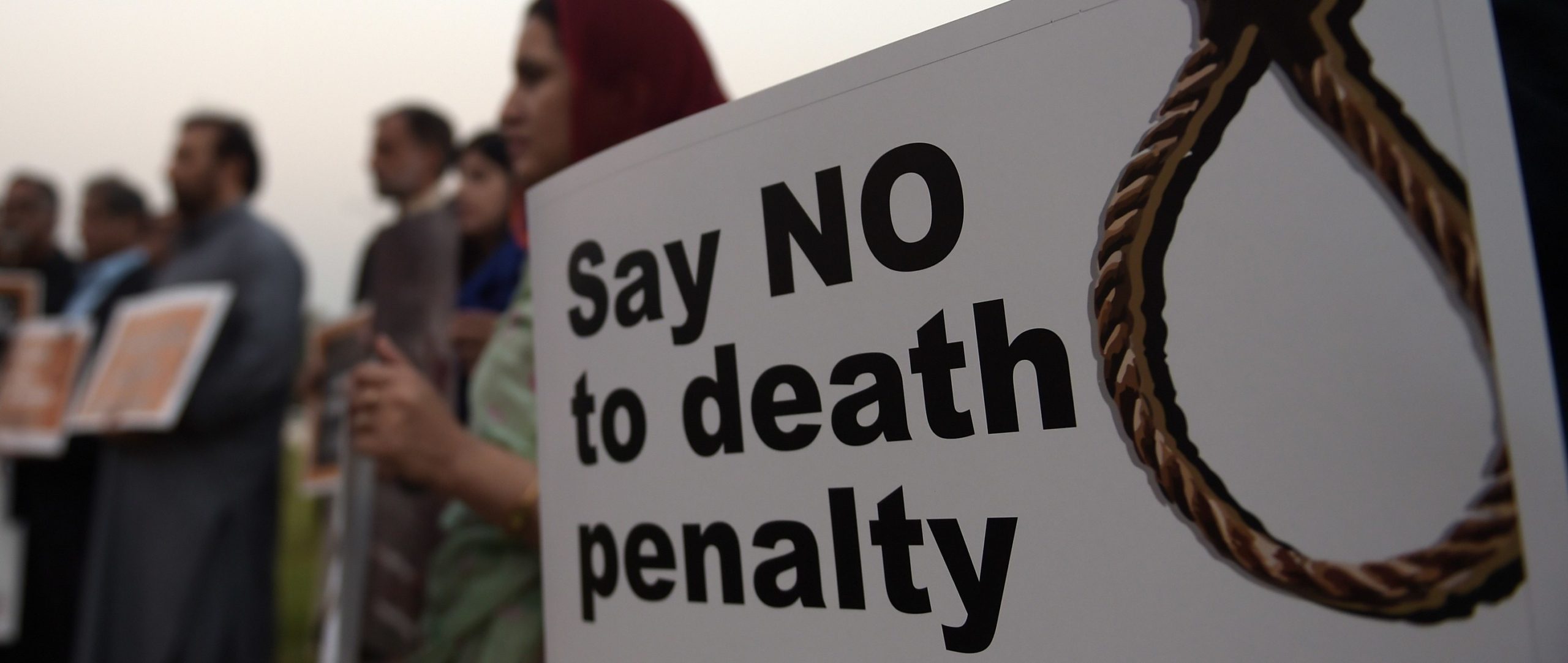
Turkey does not maintain an active death-penalty system. Capital punishment was abolished completely in 2004.
Therefore:
There is no legitimate 2026 Turkish death-row population comparable to Iran, Iraq or China.
Defendants may receive aggravated life imprisonment or very long prison terms, but they are not awaiting judicial execution under current Turkish law. Any claim that Turkey has hundreds of people awaiting execution in 2026 would be factually incorrect.
The Kurdish Question: Negotiation and Coercion at the Same Time
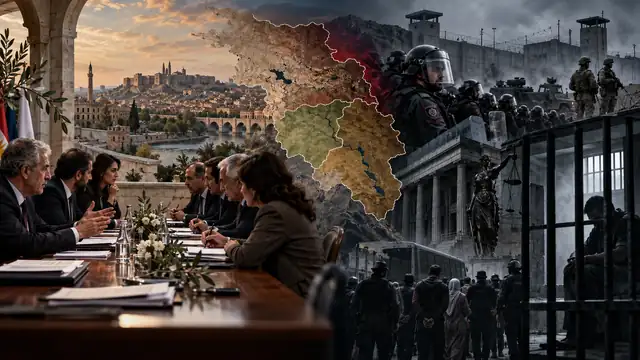
Turkey’s Kurdish policy was unusually contradictory during this period. The government simultaneously pursued a process intended to end the armed conflict with the PKK while continuing terrorism prosecutions against Kurdish politicians, journalists and activists. The PKK announced in 2025 that it would move toward disarmament following Abdullah Öcalan’s call. By May 2026 Reuters reported that the process had stalled over sequencing, legal guarantees and mutual distrust. Reuters
In Syria, Ankara continued to insist that the Kurdish-led SDF disarm and integrate into the Syrian state. President Erdoğan said in February 2026 that an agreement between Damascus and the SDF could reduce pressure on Turkey’s domestic peace process. Reuters This reveals the regional character of the Kurdish issue. Turkey’s internal Kurdish policy cannot be separated from developments in northern Syria and northern Iraq.
Journalists, Lawyers and Human-Rights Defenders
Human Rights Watch reported that 27 journalists and media workers were imprisoned or held in pretrial detention at the time of its 2026 country assessment. Human Rights Watch Lawyers representing politically sensitive defendants also faced investigation and detention. The Istanbul Bar Association came under judicial pressure after publicly calling for investigation of the deaths of Kurdish journalists in Syria.
These cases matter because legal defense and journalism are institutions that normally provide accountability over state power. When they themselves become recurring subjects of criminal investigation, the balance between prosecution and oversight changes.
Women and Gender-Based Violence

Turkey’s gender-based violence problem is substantial and measurable, but available figures largely come from civil-society monitoring rather than a single unified government dataset. The country also moved further toward a state-supported traditional-family policy during 2025 and 2026. By September 2026, authorities had launched a major operation against LGBT organizations and activists. Reuters reported that at least 31 people were jailed pending trial and 126 protesters detained, with investigations involving 162 suspects across 15 provinces. Authorities framed the action in terms of family and child protection; European rights bodies criticized the crackdown. Reuters
The political significance goes beyond one community. The episode demonstrates how social-policy language can merge with criminal law, policing and internet blocking.
PART II: Digital Repression, DPI, Social-Media Throttling and the Technical Control Layer
Turkey’s Digital-Control System Can Be Measured
One of the strongest parts of the evidence against speculative treatment of Turkish internet restrictions comes from OONI. OONI analyzed network measurements collected during major political confrontations in March and September 2025. Its findings indicated that X, Facebook, Instagram, WhatsApp, YouTube, TikTok and Signal were throttled, while Telegram Web was blocked. YouTube was also blocked via DNS on TurkNet during the measured incidents. ooni.org
This evidence is stronger than anecdotal claims that “the internet became slow.” OONI compared TLS handshake times for targeted services against comparison hosts on similar infrastructure and found abnormal degradation concentrated on the politically sensitive dates.
Which Networks Showed the Strongest Signals?
The most significant throttling indicators appeared on:
TTNET, AS47331
Turkcell Superonline, AS34984
OONI observed similar patterns on March 19–20 and September 8, 2025. ooni.org That repetition matters. It suggests that the March incident was not merely temporary congestion.
The same types of platforms showed abnormal behavior during a second political crisis months later.
Telegram Web Was Blocked Differently
Telegram Web displayed a different pattern from some other services. OONI concluded that access to web.telegram.org was blocked rather than merely throttled on major Turkish networks during both the March and September incidents, while tested Telegram mobile endpoints remained reachable. ooni.org This suggests service-specific intervention rather than a complete nationwide Telegram shutdown.
YouTube DNS Manipulation
OONI observed DNS responses for YouTube on TurkNet resolving to an address associated with censorship infrastructure rather than normal service resolution. That provides evidence of a second censorship mechanism operating alongside throttling. ooni.org The Turkish model therefore cannot be reduced to one technique.
It may involve:
Bandwidth degradation, DNS manipulation, TLS interference, selective blocking and legal takedown orders.
DPI and Historical Sandvine Evidence
Citizen Lab previously documented Sandvine/Procera PacketLogic equipment on Türk Telekom infrastructure. Its research found that PacketLogic devices appeared to be used for TCP-reset injection and in some cases for redirecting users attempting to download legitimate software toward malicious versions. That investigation involved older deployments and should not automatically be treated as proof that the same appliances caused the 2025 restrictions. This distinction is essential.
Historical vendor attribution is strong. Current-event vendor attribution remains incomplete.
What Modern DPI Can Actually Do
A DPI platform may inspect:
Destination IP, DNS request, TLS ClientHello characteristics, SNI, QUIC behavior, packet size, flow timing, UDP signatures, known VPN endpoints and application fingerprints.
Depending on policy, it may:
Throttle, block, reset, redirect or log selected traffic.
None of that requires full decryption of the communication. A state may simply identify enough metadata to prevent the session from functioning normally.
VPN Restriction

The Turkish government’s censorship environment increasingly affects circumvention tools as well. Human Rights Watch reported that many VPNs were partially blocked during the March 2025 throttling period. Human Rights Watch
From a technical perspective, VPN interference can involve:
IP blocking, protocol fingerprinting, endpoint reputation, DNS manipulation or TLS and traffic-flow analysis.
But a responsible report should not claim a specific current VPN-detection appliance unless fresh technical evidence identifies it.
Cybersecurity Law and Information Control

Turkey’s cybersecurity legislation expanded government powers over data and cybersecurity investigations. The policy rationale is legitimate in principle: modern states need tools to respond to cybercrime, data theft and national-security threats. The concern is institutional scope.
If cybersecurity law uses broad definitions around “false information,” data leaks or national security, it can also create additional pressure on journalists, researchers and whistleblowers.
The Strategic Importance of Turkey’s Physical Network Geography
Turkey sits at the junction of Europe, the Balkans, the Black Sea, the Caucasus, the Middle East and the eastern Mediterranean. That geography makes its telecommunications system strategically important far beyond domestic censorship. International traffic crosses multiple terrestrial and submarine systems.
This makes Turkey both:
An access state and a transit state.
A transit state can influence not only its own citizens’ traffic but potentially network routes used by regional operators.
Exact Interception Locations Are Not Publicly Proven
Open-source routing data can identify major carriers, autonomous systems and international transit paths. It cannot reliably identify every physical intelligence-interception cabinet or security-service rack.
A claim that a particular Turkish border facility contains an intelligence-controlled DPI system would require:
Procurement records, engineering documents, serial numbers, configuration files, facility photographs or insider testimony.
That evidentiary standard is necessary if the goal is a defensible investigative report.
PART III: Cross-Border Military Reach, Iraq and Syria, Iran Contacts, Russia Balancing and Sanctions-Sensitive Networks
Turkey’s Regional Power Does Not Stop at Its Border
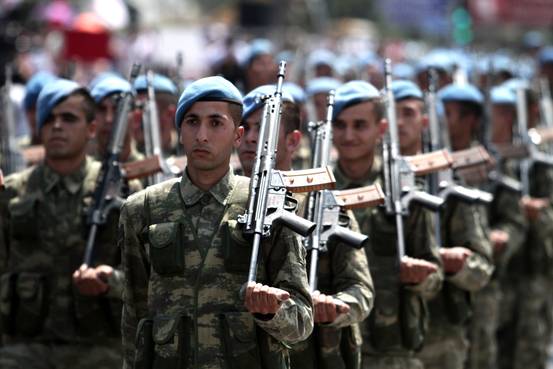
Turkey’s current foreign-policy model combines diplomacy, commercial penetration and direct military presence. Two of the clearest examples are northern Iraq and northern Syria. This regional footprint differentiates Turkey from a state whose foreign policy is exercised primarily through diplomacy.
Iraq: The Bashiqa-Zelikan Case
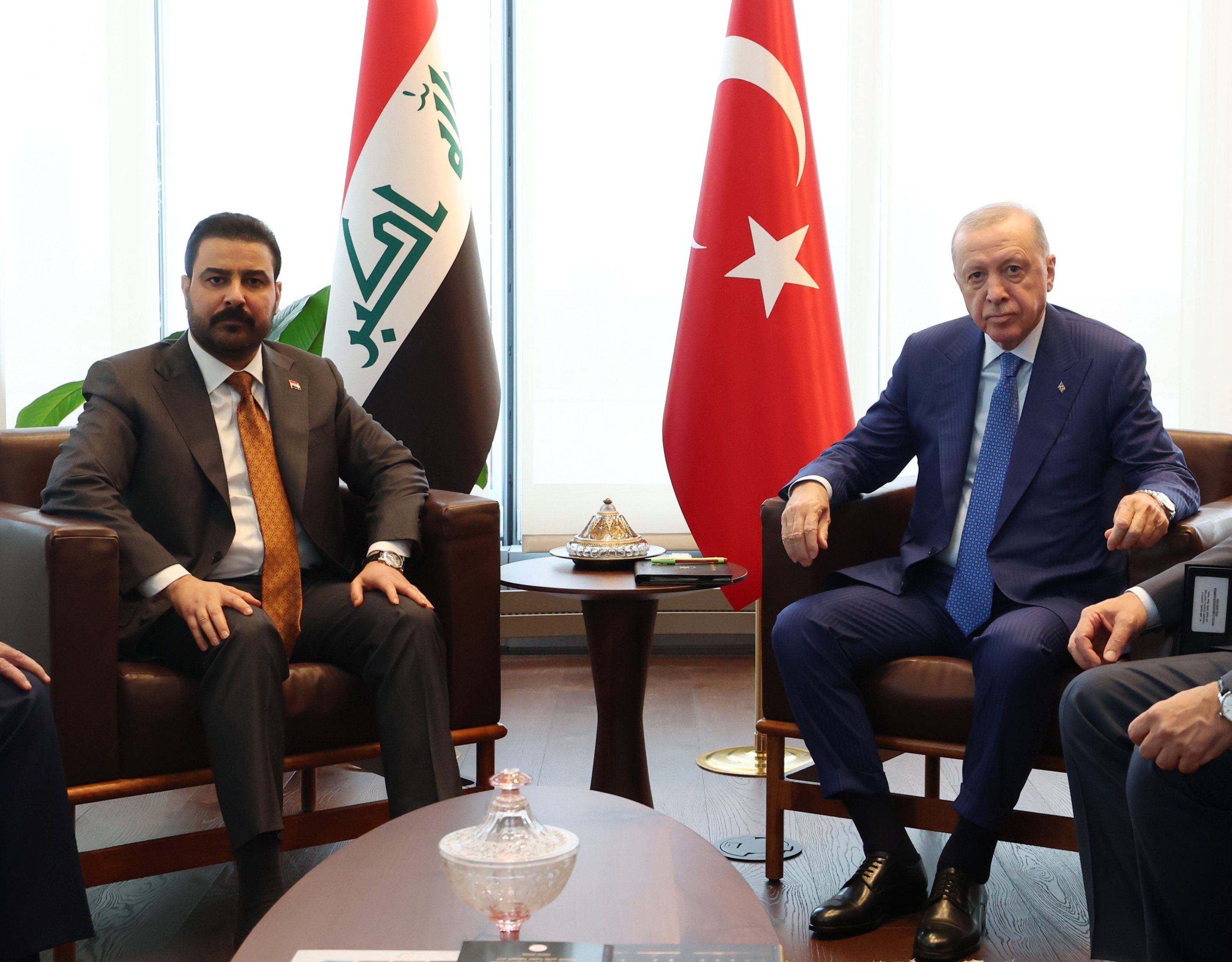
Turkey deployed forces to the Bashiqa area near Mosul in 2015, saying the mission was intended to train and protect anti-Islamic State forces. Baghdad objected to the deployment and demanded withdrawal, creating a long-running sovereignty dispute. On September 23, 2026, Ankara and Baghdad reached an agreement for Turkey gradually to transfer the Bashiqa-Zelikan military camp to Iraqi authorities. Reuters reported that the phased withdrawal was expected to be completed by the end of 2026. Turkey still maintained other positions in northern Iraq that it described as necessary for national security against the PKK. Reuters
This is concrete evidence of Turkish military reach inside Iraq. It should not be described merely as influence. It was a physical military deployment disputed by Baghdad for years.
Iraq and the PKK
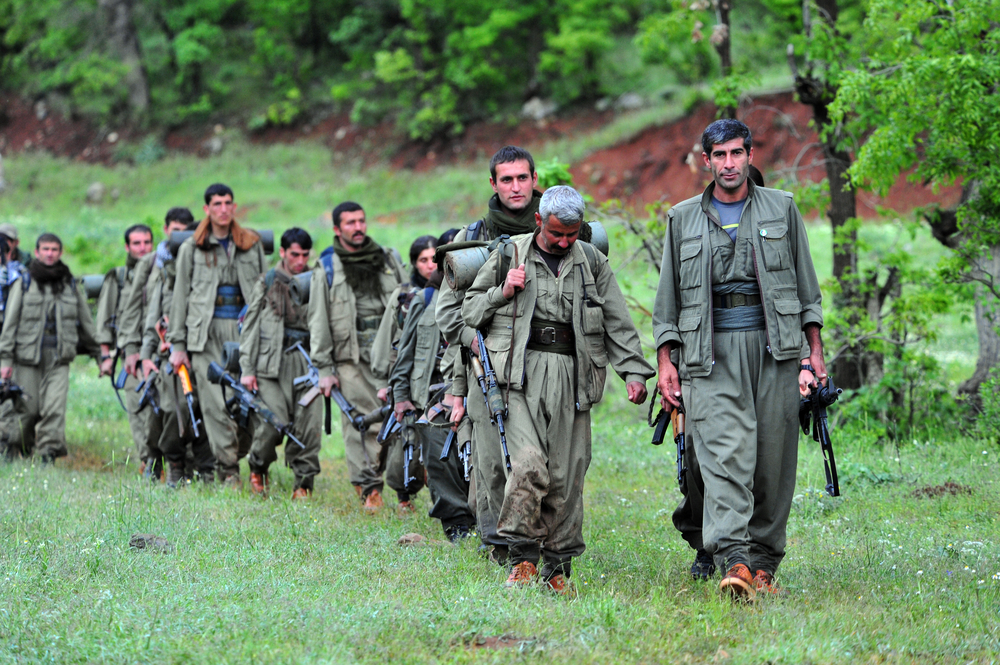
Turkey has conducted repeated military operations in northern Iraq targeting PKK positions. The Turkish government defines the PKK as a terrorist organization; the United States and European Union also designate it as such. From Ankara’s perspective, these operations are cross-border counterterrorism.
From the perspective of Iraqi sovereignty, repeated foreign military operations raise questions about control of territory and the authority to conduct force inside another state. Both dimensions are relevant.
A Consistent Standard: State Repression, Political Protest and Armed Violence

Any assessment of Turkey’s conflict with the PKK requires a distinction that is often blurred in political debate: the difference between peaceful political demands, state repression and organized armed violence. No government acquires a legitimate right to suppress peaceful protest merely by invoking national security. Citizens retain rights of political expression, association, assembly and peaceful opposition even when the state is confronting an armed organization. But the reverse is also true.
A political, ethnic, ideological or territorial grievance does not by itself create a legal right to conduct bombings, assassinations or attacks on civilians. International law also requires precision here. In a situation that legally qualifies as an armed conflict, international humanitarian law regulates who may be targeted and which methods of warfare are prohibited. That legal framework is different from suggesting that any political organization may simply invoke oppression and acquire an unrestricted right to use armed force.
The basic analytical standard should therefore remain consistent:
Peaceful political opposition is not terrorism. State repression is not justified by the existence of armed opposition. And the existence of state repression does not automatically legalize violence by non-state actors.
That distinction is relevant not only to Turkey and the PKK but to armed political movements elsewhere. Taliban forces before taking power in Afghanistan, ISIS, the PKK, Hezbollah, Hamas, the Mujahedin-e Khalq and other armed organizations differ greatly in ideology, history, legal status, constituency and operational record. They should not be collapsed into a single category. Each must be assessed through documented conduct, applicable law, civilian harm, targeting practices, command structure and current legal designation.
The MEK Historical Record: Why Legal Status and Historical Conduct Must Be Separated
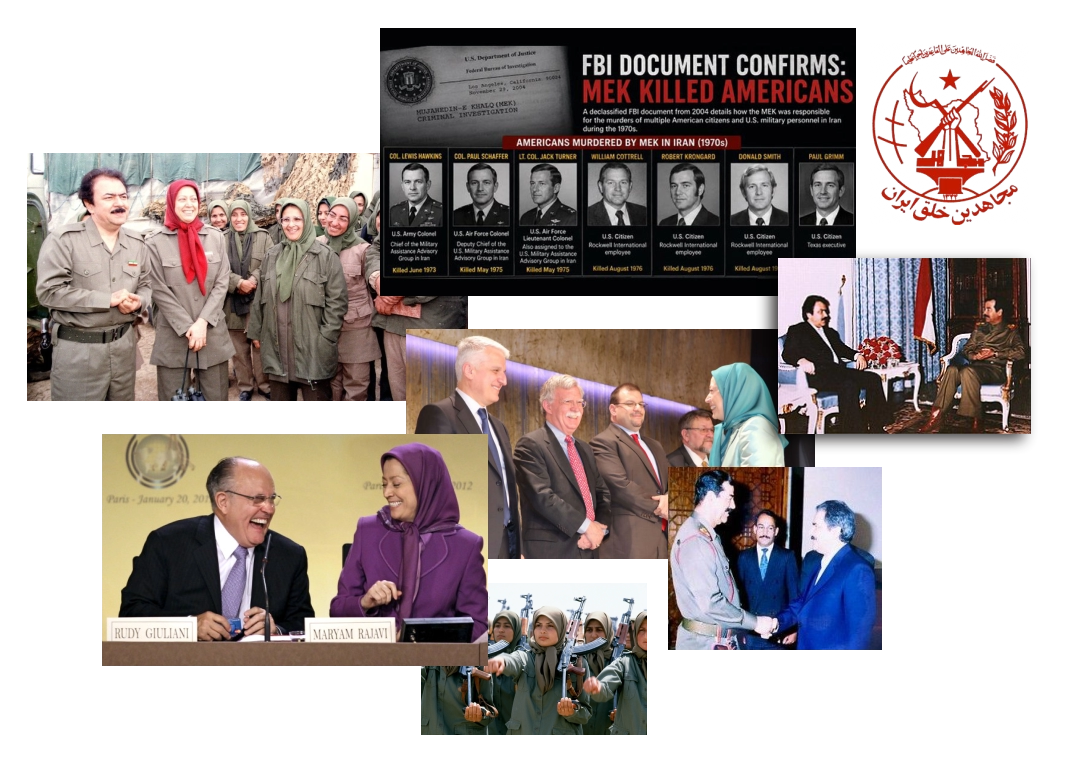
The Mujahedin-e Khalq provides a useful example of why historical conduct and present legal status must be examined separately. Official U.S. State Department records state that during the 1970s, the MEK was involved in killings of U.S. military personnel and American civilians working on defense projects in Tehran. A 1975 U.S. Embassy cable concerning the assassinations of Colonel Paul Shaffer and Lieutenant Colonel Jack Turner records that an anonymous caller attributed the killings to the Mujahedin-e Khalq. (2009-2017.state.gov) Later State Department terrorism reports also documented the organization’s relationship with Saddam Hussein’s government.
After MEK leaders were expelled from France in 1986, U.S. government reporting states that they turned to Saddam Hussein’s regime for basing, financial support and training. Near the end of the Iran-Iraq War, Baghdad supplied the organization with heavy military equipment and deployed thousands of MEK fighters in attacks against Iranian forces. U.S. government reporting later stated that before the 2003 invasion of Iraq, essentially all of the organization’s military assistance and most of its financial support came from Saddam Hussein’s government. (2009-2017.state.gov) That historical record is relevant because opposition to the Islamic Republic did not eliminate the political and moral controversy surrounding participation alongside Saddam Hussein’s armed forces during the Iran-Iraq War. It also demonstrates why opposition to an abusive government should not automatically be treated as sufficient justification for military cooperation with a foreign state against forces of one’s own country.
At the same time, accuracy requires noting the change in the organization’s legal status. On September 28, 2012, the U.S. State Department revoked the MEK’s designation as a Foreign Terrorist Organization and as a Specially Designated Global Terrorist. The Department explicitly said the decision did not erase or overlook the organization’s past terrorist acts, including involvement in the killing of U.S. citizens in Iran in the 1970s. It also cited the MEK’s public renunciation of violence, the absence of confirmed terrorist acts for more than a decade and cooperation in the peaceful closure of Camp Ashraf when explaining the delisting decision. (2009-2017.state.gov) This distinction is critical.
Historical conduct should not be erased because a designation changes. But historical designation should not automatically be presented as the organization’s current legal status either.
A serious political report should preserve both facts at the same time.
The Same Standard Must Apply to Governments
Criticism of armed opposition groups cannot become a mechanism for minimizing state-sponsored violence. The same evidentiary standard must apply to governments. The United States has designated Iran as a State Sponsor of Terrorism since 1984, and State Department reporting has described the Islamic Revolutionary Guard Corps-Qods Force as a central mechanism through which Tehran has historically supported armed and terrorist groups outside Iran. (2009-2017.state.gov)
This does not make every Iranian state institution or every Iranian official legally interchangeable with every designated organization. It does mean that a consistent analytical framework cannot condemn violent non-state actors while ignoring documented state support for armed proxies and terrorist organizations.
The governing principle should be straightforward:
State repression, terrorism, deliberate attacks on civilians and externally sponsored political violence require separate factual and legal analysis, regardless of which government or organization is responsible.
Syria: A Much Deeper Military Footprint
Turkey’s role in Syria has been even larger. Ankara supported Syrian opposition forces during the civil war and established military influence across areas of northern Syria. After Assad’s fall, Turkey emerged as one of the most influential external states shaping the relationship between Damascus and Kurdish-led forces.
The Turkish government has consistently regarded the SDF and its main Kurdish armed component as closely linked to the PKK and has demanded their disarmament. In February 2026 Erdoğan publicly welcomed the Damascus-SDF integration agreement as beneficial to regional stability and Turkey’s PKK peace process. Reuters
That is a key geopolitical point:
Turkey’s internal Kurdish conflict, northern Syrian policy and northern Iraqi military presence are part of one connected security strategy.
Ankara and Iran: Cooperation Is Real, but So Is Competition
It would be inaccurate to describe Turkey and Iran simply as allies. They compete in Syria, Iraq and over regional influence. But it would also be inaccurate to portray them as consistently hostile.
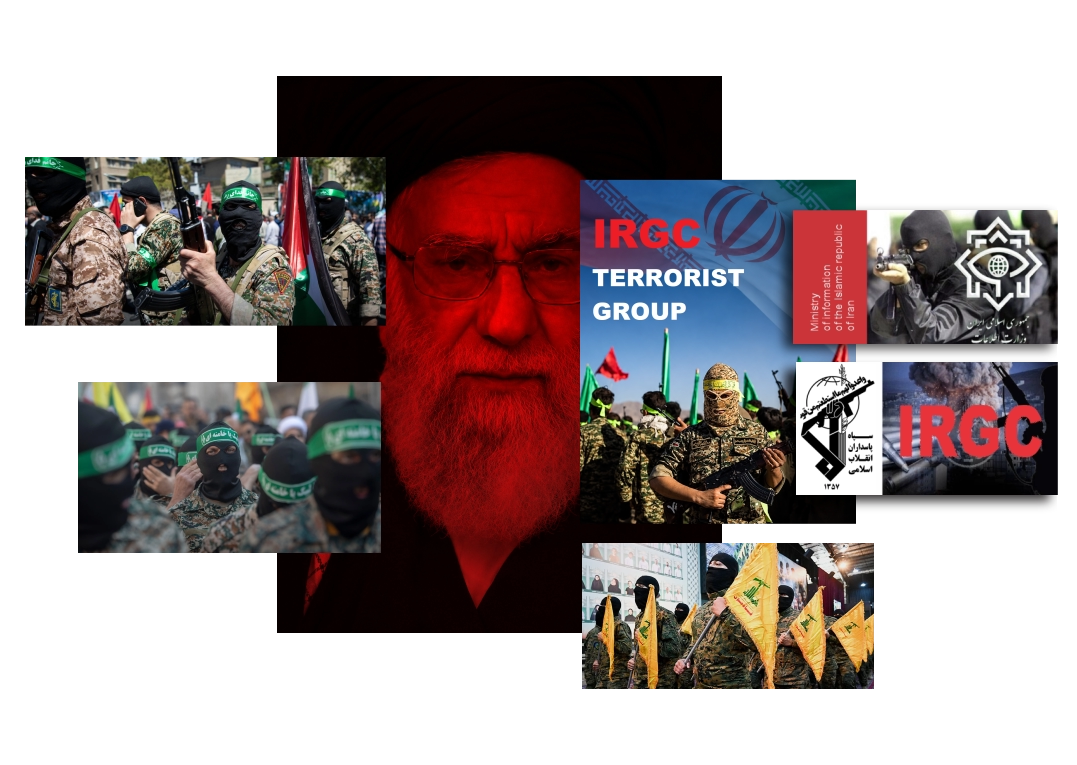
They maintain trade, diplomatic contact and intelligence-level communication when their interests require it. A particularly important 2026 example came during the U.S.-Iran conflict. Reuters reported that Turkish state media, citing security sources, said Turkey’s National Intelligence Organization, MIT, maintained direct communication with Iran, including the IRGC, and played a supporting role in ceasefire diplomacy. A Turkey-based diplomat also confirmed that Ankara had played a supportive mediation role, while Iran publicly acknowledged Turkey’s contribution. Reuters
This is important evidence. It proves direct high-level communication between Turkish intelligence and Iranian security actors. It does not prove that MIT and the IRGC operate as one intelligence organization.
Those are two very different claims.
Why the MIT-IRGC Contact Matters
States routinely communicate with adversaries during crises. Therefore intelligence contact itself is not evidence of covert alliance. The significance lies elsewhere.
Turkey can maintain:
NATO intelligence relationships, communication with Washington, direct contact with Tehran and the IRGC, regional military deployments and separate cooperation with Gulf states.
That gives Ankara an unusually broad operational network. Its leverage comes partly from being able to communicate with actors that do not communicate easily with one another.
Turkey and Iran Can Cooperate in One Theater and Compete in Another
By September 2026, Turkish military and political activity also aligned more closely with Saudi Arabia and Pakistan on Gulf security. Reuters reported that senior Turkish, Saudi and Pakistani military officials met to strengthen intelligence sharing, military coordination and capability integration as Saudi Arabia confronted attacks by Iran-backed Houthis. Reuters This directly demonstrates why Turkey should not be described as simply operating on Iran’s side.
At the same time, Turkey’s parliamentary leadership publicly discussed the possibility that a broader regional defense arrangement could eventually include Iran. Reuters Ankara’s strategy is therefore flexible rather than ideologically fixed.
Russia: Cooperation Without Alignment
Turkey also maintains an unusually complex relationship with Russia. It remains a NATO member and supports Ukraine’s territorial integrity, but it has not joined the full Western sanctions regime against Moscow and has maintained major economic, energy and diplomatic relations with Russia. In September 2026 Erdoğan again positioned Turkey as a mediator over Black Sea security and maritime attacks while keeping diplomatic channels open with both Kyiv and Moscow. Reuters
This gives Turkey influence but also makes it an important jurisdiction for sanctions-enforcement scrutiny.
Sanctions-Evasion Exposure
Turkey’s geographic and commercial position has repeatedly appeared in U.S. Treasury sanctions cases concerning both Russia and Iran. The relevant issue is not that Turkey as a state necessarily directs each network.
The risk arises because Turkey offers:
A sophisticated banking system, manufacturing base, freight networks, access to Europe, access to the Middle East and large volumes of legitimate international trade.
That combination can also be exploited by intermediaries seeking to obscure an end user.
A proper supply-chain investigation should examine:
Beneficial ownership, trade invoices, declared end user, re-export routes, freight forwarders, bank transfers, customs codes and final destination.
China’s Role Is Different
China is also important to Turkey economically. But open-source evidence does not support equating Chinese influence in Turkey with Iran’s security contacts or Russia’s energy and geopolitical ties. China’s strongest role is commercial, infrastructure-related and financial.
The three Iron Triangle states therefore interact with Turkey through different mechanisms. Iran: regional security, intelligence contact, trade and rivalry. Russia: energy, tourism, defense diplomacy, trade and sanctions-sensitive commerce.
China: infrastructure, trade, investment and industrial supply chains.
PART IV: Turkey as a NATO Power, Transit State and Strategic Intermediary Between Europe and the Middle East
Turkey Is Neither a Western Satellite Nor an Anti-Western Bloc State
Turkey’s strategic position cannot be understood through a simple pro-Western or anti-Western label. It belongs to NATO. It hosts major allied military infrastructure.
It cooperates with the United States and European states on defense. At the same time, it negotiates independently with Russia and Iran, conducts military operations in neighboring states and frequently rejects Western political pressure. This is best understood as strategic autonomy.
Why Europe Continues to Engage Ankara
Europe depends on Turkey in several areas:
Migration management, NATO defense, Black Sea security, energy routes, counterterrorism and regional diplomacy.
Turkey depends on Europe for:
Markets, investment, trade, finance, tourism and institutional access.
That mutual dependence limits both sides’ willingness to sever relations even when disputes over democracy or human rights become severe.
NATO Creates Leverage
Turkey’s military value to NATO is substantial. Its territory controls the Bosporus and Dardanelles. It sits near Russia, the Caucasus, Syria, Iraq and Iran.
It maintains one of the alliance’s largest armed forces. That gives Ankara bargaining power on issues that have little direct relationship to defense.
For Western governments, this creates a recurring dilemma:
Security dependence can reduce the political cost of domestic repression.
That is not proof of a secret arrangement. It is a structural consequence of strategic importance.
Iran, Russia and Turkey: Not One Bloc
The evidence does not support describing Turkey, Russia and Iran as a single coherent geopolitical alliance. Their relations are transactional. They can cooperate over one crisis and oppose each other over another.
Turkey and Iran have supported competing actors in parts of Syria. Turkey and Russia have backed opposing sides in multiple conflicts while simultaneously cooperating in energy and diplomacy. The value of Turkey’s strategy lies precisely in avoiding exclusive alignment.
A State That Can Talk to Everyone Gains Power
The April 2026 Iran ceasefire effort is a good illustration. Turkey’s intelligence service reportedly communicated with both Western states and the IRGC while Pakistan formally brokered the agreement. Reuters In diplomacy, such access can be valuable.
In counterintelligence analysis, however, it also means that Turkey sits at a junction where information from competing security systems can intersect. That does not demonstrate unlawful intelligence sharing. It does demonstrate strategic access.
Europe and the United States Face a Compliance Problem
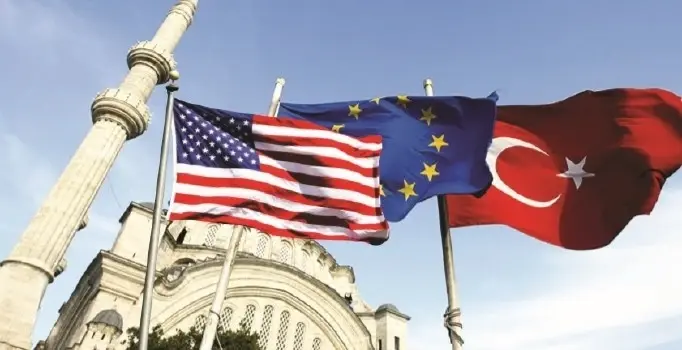
The same Turkish companies and logistics channels that enable legitimate NATO and European commerce may also become routes for sanctioned goods. This is why export-control enforcement should focus on transactions rather than nationality.
Relevant red flags include:
Dual-use electronics sold to obscure intermediaries, unexplained changes in end user, companies created shortly before export transactions, high-risk re-export destinations, invoice descriptions inconsistent with hardware capability and sudden changes in shipping route.
Humanizing Digital Restrictions
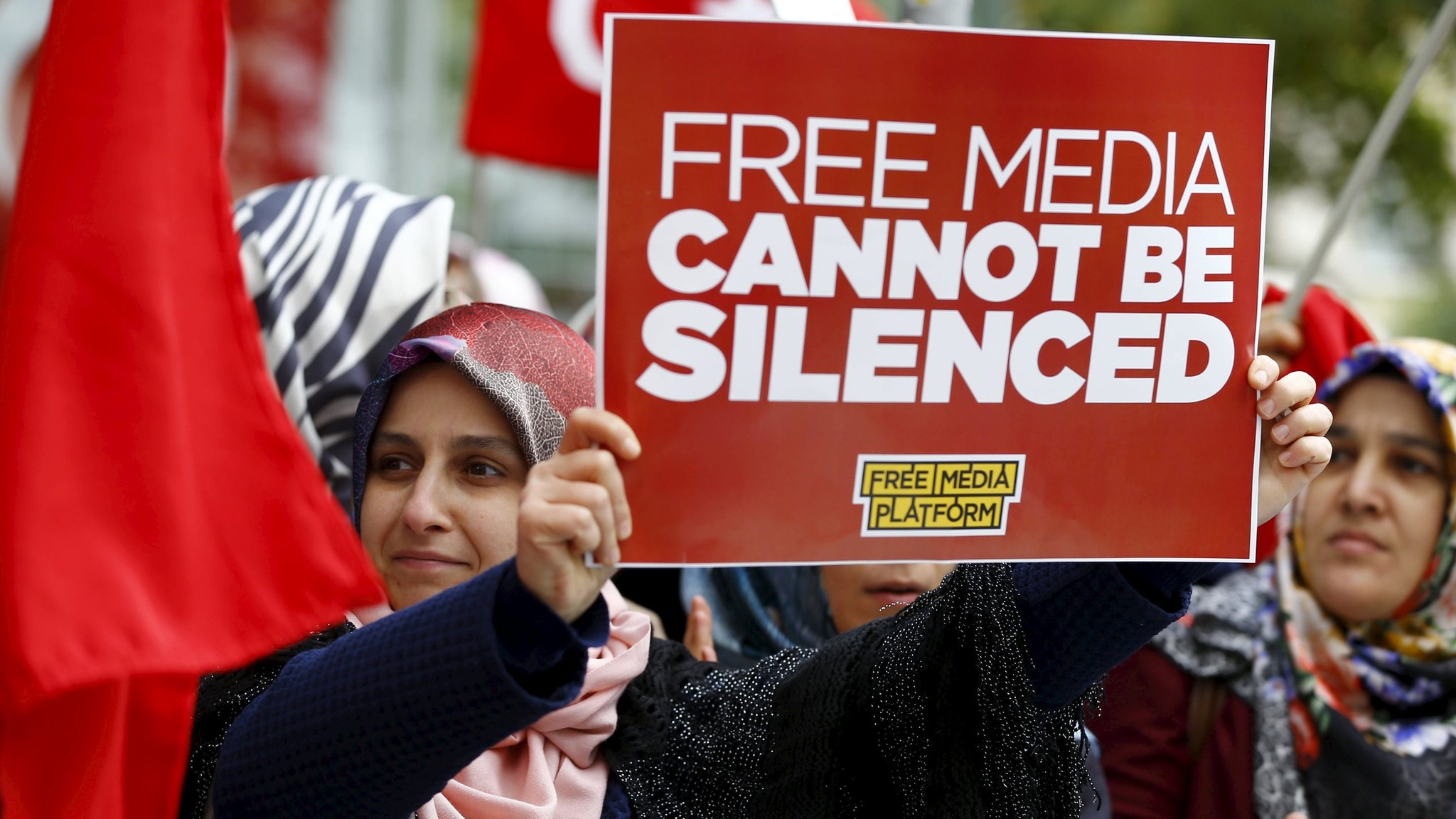
Turkey’s March 2025 throttling affected platforms that are not merely political tools.
WhatsApp, YouTube, Signal, Instagram and other services are also used for:
Business, education, family communication, journalism, emergency coordination and healthcare.
A nationwide restriction therefore does not distinguish between a protest organizer and a physician trying to send information. That does not mean every throttling event causes a death. Direct medical causation requires patient-level evidence.
The stronger claim is that mass connectivity restrictions can disrupt time-sensitive civilian communications and create measurable public-service and economic risks.
Economic Exposure Is Now Enormous
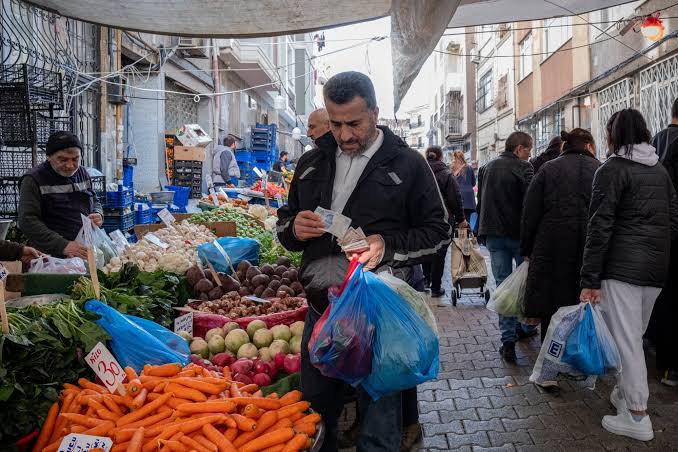
Turkey’s Ministry of Trade reported total e-commerce volume of 4.57 trillion Turkish lira in 2025, representing approximately $115.43 billion, with 5.94 billion transactions. Ministry of Trade That scale matters. Even temporary restrictions can affect thousands of businesses simultaneously.
There is still no authoritative public dataset that isolates the exact quarterly economic loss caused specifically by censorship. Therefore, precise quarterly censorship-loss numbers should not be invented.
September 2026 Financial Instability
Turkey also entered a separate financial crisis in September 2026 involving the liquidation of investment funds. Reuters reported that 131 funds worth approximately $18 billion were involved and that nearly half a million investors were affected. Authorities responded by establishing a new coordination mechanism to oversee liquidation and protect investors. Reuters This crisis was not caused by internet censorship.
It is significant because it demonstrates the broader fragility of investor confidence when political, regulatory and financial uncertainty coincide.
The Iraq Withdrawal and Turkey’s Regional Opportunity
The scheduled completion of the U.S. military withdrawal from Iraq by September 30, 2026 changes the regional balance. Reuters reported concerns that the departure could increase Iranian influence and alter Iraq’s security equilibrium. Reuters For Turkey, that creates both opportunity and risk. Ankara wants Iraq to suppress PKK-linked armed structures while maintaining Iraqi territorial stability.
Iran seeks influence through allied militias. The reduction of the U.S. military footprint therefore increases the importance of Turkish-Iranian competition inside Iraq.
Turkey’s Regional Model
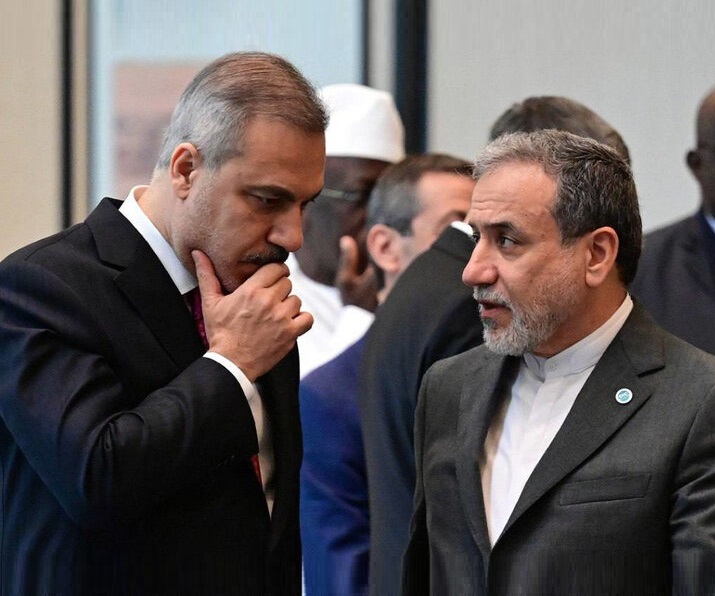
The Turkish state’s power is increasingly exercised through a mix of:
Military deployment, intelligence diplomacy, cross-border counterterrorism, trade, telecommunications, energy, regional infrastructure and political mediation.
This is what makes THE ANKARA POWER NETWORK a more accurate title than “Turkey Under Pressure.” The central feature is not passivity. It is reach.
Final Assessment
Turkey in 2025 and 2026 presents a political and strategic model that differs from the states analyzed elsewhere in this series.
Domestically, the most significant evidence concerns:
Opposition prosecutions, mass protest arrests, allegations of unlawful police force, internet throttling, media pressure, judicial conflict and increasingly restrictive social policy.
Technically, OONI provides strong empirical evidence that major social-media and messaging platforms were throttled or blocked during political confrontations in March and September 2025. ooni.org Regionally, Turkey exercises real military and security reach. Its long-running deployment in northern Iraq produced a sovereignty dispute that is only now being partially unwound through the Bashiqa transfer. Reuters
In Syria, Ankara remains one of the most important outside powers shaping Kurdish integration and northern security. With Iran, the relationship combines rivalry with direct intelligence communication when diplomatic circumstances require it. Reuters’ reporting on MIT contacts with the IRGC during the 2026 ceasefire process is direct evidence of that contact, but not evidence that the two intelligence systems are institutionally unified. Reuters With Russia, Turkey combines NATO membership with strategic non-alignment on sanctions and continued economic and diplomatic engagement.
With China, the relationship is primarily commercial and infrastructural rather than equivalent to Russia or Iran. The most accurate conclusion is therefore not that Turkey belongs to one fixed bloc. Turkey’s strength comes from operating across blocs.
That produces leverage. It also produces accountability risks.
For Europe and the United States, the key investigative questions should remain concrete:
Who controls the procurement chain? Who finances the transaction? Which intelligence service directed the operation? Which telecom equipment performed the filtering? Which military unit crossed the border? Which law authorized the detention? Which company moved the sanctioned component?
That standard separates evidence from allegation. And in Turkey’s case, the evidence already demonstrates a state with substantial domestic control capacity and significant cross-border strategic reach.
SOURCES AND REFERENCE MATERIAL
Human Rights Watch, World Report 2026: Türkiye
https://www.hrw.org/world-report/2026/country-chapters/turkiye
Human Rights Watch, Türkiye: Government Targets Main Opposition, February 4, 2026
https://www.hrw.org/news/2026/02/04/turkiye-government-targets-main-opposition
Human Rights Watch, Türkiye: Crackdown Ahead of NATO Summit, June 25, 2026
https://www.hrw.org/news/2026/06/25/turkiye-crackdown-ahead-of-nato-summit
Amnesty International, Police Force During March 2025 Protests
Amnesty International, “I Cannot Breathe” Investigation
https://www.amnesty.org/en/documents/eur44/9471/2025/en/
OONI, Throttling of Social Media in Türkiye During Protests
https://ooni.org/post/2025-turkiye-throttling-social-media/
Reuters, Turkey-Iraq Agreement on Bashiqa-Zelikan Military Camp, September 23, 2026
Reuters, Turkish Intelligence and the U.S.-Iran Ceasefire, April 8, 2026
Reuters, Erdoğan on Syria-SDF Integration, February 5, 2026
Reuters, Turkey-Saudi-Pakistan Military Cooperation, September 25, 2026
Reuters, Possible Expansion of Turkey-Saudi-Pakistan Defense Pact, September 25, 2026
Reuters, Turkey’s Black Sea Mediation and Russia-Ukraine Balancing, September 24, 2026
Reuters, September 2026 LGBT Arrest Campaign
Turkey Ministry of Trade, 2025 E-Commerce Report
https://ticaret.gov.tr/duyurular/turkiyede-e-ticaretin-gorunumu-raporu-yayinlandi-12-05-2026
Reuters, Turkey Investment-Fund Crisis, September 2026
Reuters, Turkey Fund Coordination Council, September 29, 2026
Reuters, U.S. Forces Exit Iraq and Regional Iranian Influence, September 29, 2026
Research, investigation, compilation and preparation by the Editorial Team.